Welcome, Developers! 👋 This week we're reading about the parts of Rust that still hurt even after you "get" the borrow checker, what 1,884 files and 512K lines of leaked Claude Code source actually reveal about how a production agentic CLI is built, and what happens when Cloudflare runs AI code review across tens of thousands of merge requests. Plus Claude Managed Agents, and a workflow automation shift. |
|
|
|
|
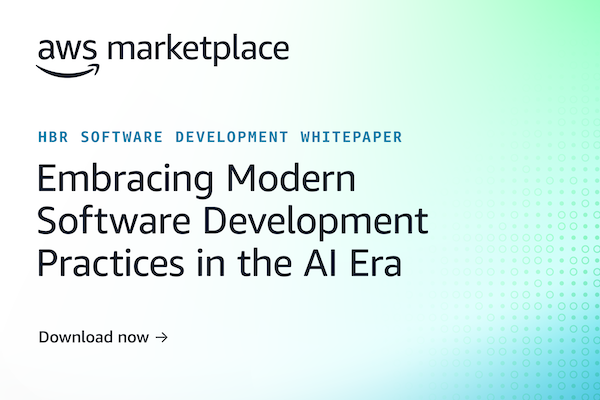 |
Four pillars that allow teams to move faster while staying secure AI is transforming how software is built & delivered, but speed without strong platform controls can increase risk. This AWS-sponsored Harvard Business Review Analytic Services whitepaper outlines four critical pillars for using AI safely to accelerate delivery. Learn how leading engineering teams reduce time-to-market, lower defect escape, & contain supply-chain risk. Explore practical adoption strategies & real-world results from organizations that have successfully implemented AI at scale. |
| Download now |
|
|
🔖 The Reading Room Articles we have hand-picked for you: |
|
|
What We Heard About Rust's Challenges The conventional wisdom says Rust has a steep learning curve and then smooth sailing awaits. A Rust team interview project found that challenges don't disappear with experience; they mutate. Beginners wrestle with ownership, but experienced developers hit new walls: async fragmentation that forces runtime lock-in, long compile times that tax every iteration cycle, and an ecosystem where choosing the right crate requires tacit knowledge newcomers don't have. The borrow checker is the one thing that genuinely gets easier. By Jack Huey → |
|
Orchestrating AI Code Review at Scale Cloudflare tried off-the-shelf AI review tools, hit a flexibility ceiling, then built their own: seven specialised agents (security, performance, code quality, docs, release, compliance, AGENTS.md) managed by a coordinator that deduplicates findings and decides whether to approve or block. After a month across 5,169 repos and 131,246 review runs, the median review lands in 3m 39s at 98 cents, the break-glass override fires on 0.6% of MRs, and the cache hit rate sits at 85.7%. A dense, honest write-up of putting LLMs directly in the critical path of CI. By Ryan Skidmore → |
|
Mini-Vibe Check: Claude Managed Agents If you have spent months hand-rolling session handling, memory, credential storage, and tool wiring for AI agents, Anthropic's Managed Agents beta has a complicated message for you. It does all of that as a hosted service, which is liberating if you want to focus on harder problems and uncomfortable if that plumbing was your moat. A short, honest piece on what it means when infrastructure work you invested in quietly becomes a single API call. By Laura Entis → |
|
Inside Claude Code: An Architecture Deep Dive After Claude Code's source was exposed through a map file in its own npm package, Zain Hasan walked through 1,884 files and 512K lines of TypeScript and wrote up how a production agentic CLI is actually built. Diagrams, directory maps, and end-to-end traces cover the query loop as an async generator, the 50+ tool interface contract, the multi-layer permission system, and a five-layer context compaction pipeline that keeps long sessions alive. Rare visibility into a real, shipped, widely-used agent. By Zain Hasan → |
|
Replace Make.com and n8n with Claude Code Routines Make.com and n8n have owned workflow automation for years, but their node-based UIs hit a ceiling once your logic gets conditional, stateful, or version-controlled. This walkthrough shows where Claude Code routines slot in as a developer-first alternative — from migrating an existing Make.com scenario step by step, to patterns that are awkward or outright impossible in visual builders, to a grounded cost breakdown from a real migration instead of a vendor pitch. By SitePoint Team → |
|
|
|
|
|
|
🔗 The Link Lounge Unordered finds from around the web:
Find something cool? You can send us links to feature here via email. |
|
|
|
|
🧰 The Toolbox Tools and products we're excited about today: |
|
|
OpenCode Open-source AI coding agent that runs in your terminal, IDE, or as a new desktop app. Works with 75+ LLM providers including local models, supports multi-session parallel agents on the same project, and exposes a server-first SDK — which is what Cloudflare built its internal code review system on top of. Learn more → |
|
Microsoft Agent Framework 1.0 Microsoft's production-ready 1.0 release for .NET and Python consolidates Semantic Kernel and AutoGen into a single open-source framework for building and orchestrating multi-agent apps. Stable APIs, long-term support, multi-provider model support, and cross-runtime interop over A2A and MCP. Learn more → |
|
gh skill (GitHub CLI) GitHub's CLI now has a gh skill command in public preview for managing agent skills directly from the terminal. Skills aren't verified by GitHub and can contain prompt injections or hidden instructions, so inspecting with gh skill preview before install is strongly recommended. Learn more → |
|
OpenScreen An MIT-licensed, open-source Electron desktop app for recording polished product demos — window or full screen, auto and manual zoom, custom backgrounds, motion blur. Positioned as a direct replacement for paid demo recorders, with no subscription and commercial use allowed. Learn more → |
|
|
|
Four pillars that allow teams to move faster while staying secure AI is transforming how software is built & delivered, but speed without strong platform controls can increase risk. This AWS-sponsored Harvard Business Review Analytic Services whitepaper outlines four critical pillars for using AI safely to accelerate delivery. Learn how leading engineering teams reduce time-to-market, lower defect escape, & contain supply-chain risk. Explore practical adoption strategies & real-world results from organizations that have successfully implemented AI at scale.
Download now → |
|
|
|
🎤 Your Voice Your feedback shapes what comes next! We read every email, so simply hit reply and tell us what's on your mind. |
|
|
|
|