Welcome, Developers! 👋
Today: Browser vendors unite for Interop 2026 compatibility standards, modern CSS replaces your 2015 hacks with native solutions, frontend roles now demand full-stack skills, Netflix shares their LLM post-training infrastructure, and pointer compression cuts Node.js memory usage in half without code changes. | | |
| | |
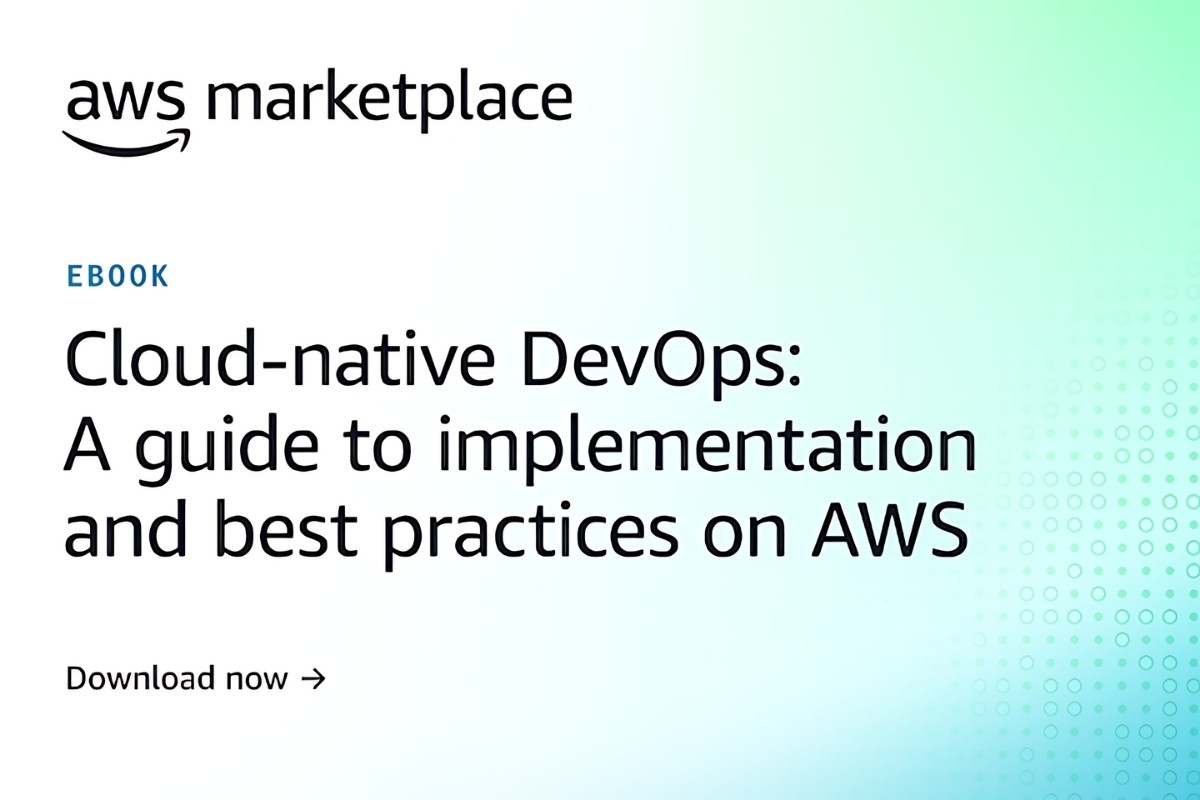
| Modernize development, deploy with confidence, and scale securely Modern application teams must move quickly while maintaining security and reliability.
In this Amazon Web Services (AWS) ebook, learn how cloud-native DevOps practices on AWS help organizations modernize application development, improve deployment velocity, and deliver greater business value.
|
| Download now | | |
|
🔖 The Reading Room
Articles we have hand-picked for you: | | |
Announcing Interop 2026
The fifth annual Interop Project brings together Apple, Google, Igalia, Microsoft, and Mozilla to improve cross-browser compatibility across 20 focus areas. Safari has already shipped many included features like contrast-color(), media pseudo-classes, and scoped custom element registries.
By Yulun Wu and Jen Simmons → | |
Stop Writing CSS Like It's 2015
Modern.css showcases 75+ CSS code snippets comparing outdated hacks with clean, native replacements updated for 2026. Every technique covers centering elements, animations, layouts, colors, and forms without JavaScript dependencies. The site provides browser compatibility percentages and categorizes snippets by difficulty level, proving that most modern CSS solutions have excellent support (85-96% across browsers).
By naeemnur → | |
The Death of the 'Pure' Frontend Developer
The "pure" frontend developer is dead, replaced by roles that span database queries, edge middleware, CI/CD pipelines, and caching strategies. Modern job listings now require React, Server Components, ORMs, PostgreSQL pooling, edge functions, and observability dashboards. This isn't a prediction but the current reality of framework defaults and team structures at product companies shipping on modern stacks.
By SitePoint Team → | |
Scaling LLM Post-Training at Netflix
Netflix built an internal post-training framework to adapt foundation models for personalization and search at scale. While pre-training gives LLMs broad knowledge, post-training aligns them to domain constraints and production requirements. At Netflix scale, this becomes an engineering problem: managing distributed GPU clusters, coordinating multi-stage workflows, and handling edge cases around data preparation, model sharding, and fault tolerance.
By Baolin Li, Lingyi Liu, Binh Tang, Shaojing Li → | |
We cut Node.js' Memory in half (so you don't have to)
Pointer compression in V8 can cut your Node.js memory usage in half without changing a single line of code. Thanks to new IsolateGroups work by Cloudflare and Igalia, the previous 4GB shared memory cage limitation is gone. Each worker thread now gets its own 4GB heap, making this optimization viable for production deployments. Simply swap to the node-caged Docker image and watch your memory usage drop.
By Matteo Collina → | | |
| |
| |
🔗 The Link Lounge Unordered finds from around the web: Find something cool? You can send us links to feature here via email. |
| | | | |
🧰 The Toolbox
Tools and products we're excited about today: | | | |
Gemini 3.1 Pro
Gemini 3.1 Pro is now available in preview and doubles reasoning performance, scoring 77.1% on ARC-AGI-2. It claims to improve its complex problem-solving and code generation. Learn more → | |
Oat UI
Oat UI is an ultra-lightweight UI library (~8KB CSS+JS, zero dependencies). It styles semantic HTML tags directly without classes, includes common components, and supports dark theme via simple CSS variables. Learn more → | |
stoolap/node
stoolap/node is a native Node.js driver for Stoolap, an embedded Rust SQL database. It offers MVCC transactions, a cost-based optimizer, and parallel execution — beating SQLite on 47 of 53 benchmarks. Learn more → | |
BrowserPod
BrowserPod runs untrusted code entirely in the browser using WebAssembly, eliminating cloud sandbox costs and latency. It starts with Node.js, adds privacy-first local execution, and exposes services via shareable URLs through Portals. Learn more → |
| | |
Modernize development, deploy with confidence, and scale securely
Modern application teams must move quickly while maintaining security and reliability.
In this Amazon Web Services (AWS) ebook, learn how cloud-native DevOps practices on AWS help organizations modernize application development, improve deployment velocity, and deliver greater business value.
Download now → |
| | |
🎤 Your Voice Your feedback shapes what comes next! We read every email, so simply hit reply and tell us what's on your mind.
| | | | | |
|