Welcome, Developers! 👋 An LLM let off the leash behaves a lot like the brilliant rockstar dev who writes code nobody else understands, then quits and leaves you the mess. That is our lead read this week. Elsewhere: Cloudflare bought VoidZero, so the team behind Vite now sits inside an infrastructure giant. Anthropic shipped Claude Fable 5, the first Mythos-class model the public can actually call. A solo developer rebuilt a 90s software renderer from scratch and wrote up every trick. Microsoft Build dropped a Postgres-compatible HorizonDB and a five-layer agent stack. And the largest Patch Tuesday in history landed at 206 fixes, which Microsoft credits to AI-assisted vulnerability hunting. |
|
|
From our sponsor: ManageEngine |
|
|
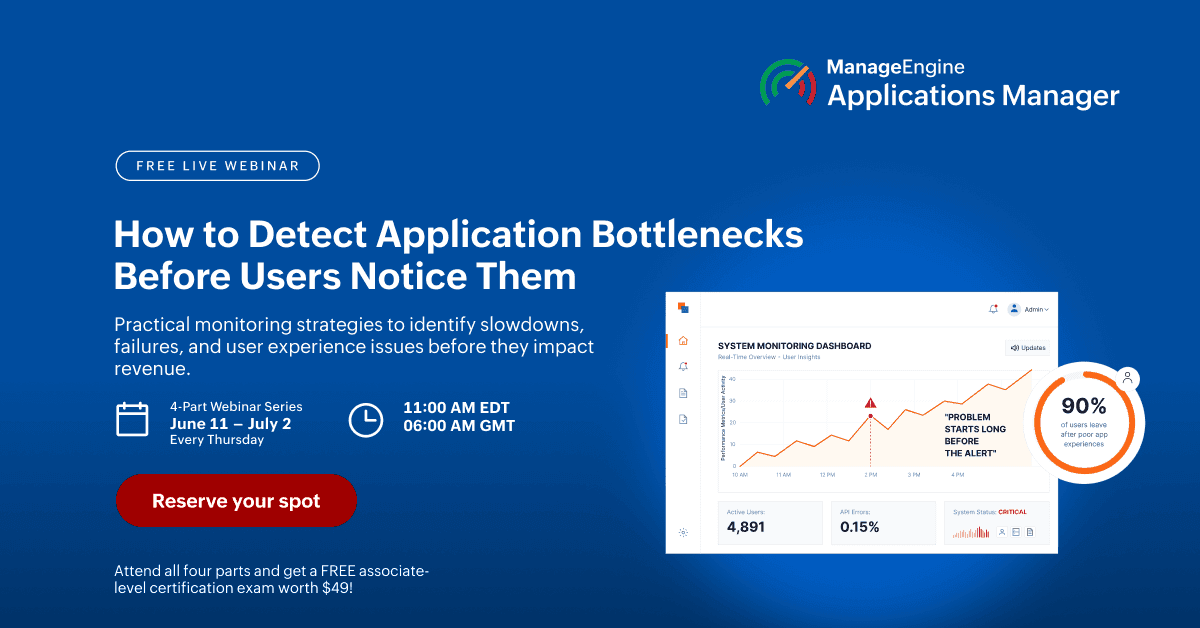 |
Get Certified in Monitoring with Applications Manager's Free Training Join a live Applications Manager free training 2026 - Season 2, which is 4 part webinar series. Learn how to monitor application performance, digital experiences, cloud environments, critical infrastructure, and more.
Led by product experts, these sessions are packed with practical insights, real-world monitoring strategies, and best practices. Attend all sessions to earn a Certificate of Completion and showcase your observability expertise. |
| Reserve Your Spot |
|
|
🔖 The Reading Room Articles we have hand-picked for you: |
|
|
Cleaning up after AI rockstar developers You know the rockstar: joined full of energy, rewrote the core architecture in languages nobody else knew, rejected everyone's PRs, then got bored and left you a codebase that reads like someone covering up a murder. Skinner's argument is that an unleashed LLM is exactly that developer, except now there are hundreds of them. The agent forgets everything from yesterday, generates tens of thousands of lines in minutes, does not care whether the system stays understandable, and happily adds belt-and-suspenders complexity you never needed. A vibe-coded pile of slop is worse than one rockstar's mess, because at least the rockstar had a design in mind. The fix is not to stop using LLMs but to refuse to let them act like rockstars: lead the engineering, keep the generated snippets small, tap the brakes when you stop understanding what is happening, and leave the model in the toolbox sometimes. Craftsmanship is the one thing you cannot outsource. By Jesse Skinner → |
|
VoidZero is joining Cloudflare Evan You's VoidZero, the team behind Vite, Vitest, Rolldown, and Oxc, has been acquired by Cloudflare. Given that Vite sits under roughly 129 million weekly downloads and underpins Nuxt, SvelteKit, Astro, and TanStack Start, this is the rare ecosystem story that touches almost every JavaScript developer. You is candid about the why: adoption never solved monetization, and splitting a small team between open-source tooling and a cloud platform was not working. Everything stays MIT-licensed and the Vite team keeps driving the roadmap, with Cloudflare committing $1M to an independent Vite ecosystem fund. The open question worth sitting with: Vite earned its place by being vendor-neutral, and now it lives inside a vendor that competes with the very clouds Vite apps deploy to. Astro joined Cloudflare earlier this year, so this is a pattern, not a one-off. By Evan You → |
|
Catlantean 3D: Making Graphics Like It's 1993 Marko Stanic is building a complete first-person shooter using early-90s techniques, and the writeup is a treat for anyone who likes to see the machine underneath. The self-imposed constraints are the fun part: everything from scratch including the assets, fixed-point math for game logic so behaviour is deterministic, floating-point only where it does not matter for rendering, and it has to be a finished, fun game rather than a tech demo. The deep dive in this first post is the particle pipeline, which turns out not to simulate particles at all: each effect is a radial energy field computed pixel by pixel in a Python script (a soft expanding core, jittered rays, value noise to rough up the shapes), baked to PNG frames, then quantized to the game's texture format so the software rasterizer can blit it as fast as possible. A lovely reminder that constraints, not horsepower, are what make graphics work feel like craft. By Marko Stanic → |
|
Anthropic ships Claude Fable 5, its first public Mythos-class model Anthropic released Claude Fable 5, the first publicly available model in a new "Mythos-class" tier that sits above the Opus line. The framing worth noting for developers is the safety architecture, not just the benchmarks: Mythos Preview was held back in April over cybersecurity concerns, and Fable 5 is the version Anthropic considers safe for general use because high-risk requests in areas like cybersecurity, biology, and chemistry are blocked and rerouted to Opus 4.8. On capability, Anthropic reports state-of-the-art results on nearly all tested benchmarks, with independent testing putting it around 80% on SWE-Bench Pro, and the lead growing on longer, more complex tasks. It is priced at $10 / $50 per million input/output tokens, with the API id claude-fable-5, and is free on Pro, Max, Team, and Enterprise plans through June 22 before moving to usage credits. (Worth a neutral read regardless of which model you build on.) By Anthropic → |
|
Everything Microsoft announced at Build 2026 A clean single-page index of a very dense keynote. Satya Nadella's framing was "agents need a place to live," and the new stack he laid out has five layers: compute, models, context, tools, and runtime, with security and governance wrapped around all of it. The headliner for most developers is Azure HorizonDB, a Postgres-compatible database with automated failover, up to 128TB per cluster, and a claimed 3x throughput over self-managed Postgres. Around it: a GitHub Copilot CLI, agent tooling threaded through GitHub, Azure, and VS Code, and a GPU-accelerated Fabric warehouse Microsoft says ran roughly 7x faster than rivals in internal tests. If you only have ten minutes for Build, this recap is the efficient way to get the surface area without sitting through the stream. Via The Neuron → |
|
|
|
|
|
|
🔗 The Link Lounge Unordered finds from around the web:
Find something cool? You can send us links to feature here via email. |
|
|
|
|
🧰 The Toolbox Tools and products we're excited about today: |
|
|
Azure HorizonDB Microsoft's new Postgres-compatible database hit public preview at Build on June 2. It separates compute and storage with a Rust-based storage engine, scales to 3,072 vCores and 128TB, and claims up to 3x the throughput of self-managed Postgres. The AI-oriented bits are the interesting part: DiskANN vector search does single-pass filtered queries (predicate checked during graph traversal instead of post-filtering), and the azure_ai extension lets you invoke models from inside SQL. Pay-as-you-go, in five regions at launch (Australia East, Central US, Sweden Central, West US 2 and 3) with more arriving. Worth a look if you are evaluating Aurora or AlloyDB for agent workloads. Learn more → |
|
Remote control for Copilot CLI Now generally available: kick off a Copilot CLI session in your terminal, VS Code, or JetBrains, then monitor and steer it from the GitHub Mobile app or github.com while you are away from your desk. With remote control on, Copilot streams session activity live so you can track progress, tweak the plan before it starts implementing, queue the next message, approve or deny permission requests, answer questions, or stop the run entirely. Start one with copilot --remote, or flip an existing session with /remote on. Genuinely handy for long agent runs you do not want to babysit at the keyboard. Learn more → |
|
Ardent Git for your data infrastructure. Ardent replicates your production Postgres into a read replica, then lets you create isolated branches from that replica in under 6 seconds, each one a full Postgres database with your real data. Branches auto-suspend after 5 minutes of inactivity and spin back up instantly on reconnect, and you only pay for changes made on the branch. The CLI mirrors git: branch create, switch, info, delete. Works with Supabase, AWS RDS, PlanetScale, or self-hosted Postgres. Useful for migration testing, agent database work, and replacing shared staging databases with one-off branches. Learn more → |
|
Traceway OpenTelemetry-native observability platform, MIT licensed, self-hosted in about 90 seconds. One docker compose up gets you logs, traces, metrics, exceptions, session replay (web and Flutter), and AI observability (LLM cost, tokens, latency, full conversations) on a single trace ID. Point any OTel SDK at OTLP/HTTP ingest and traces start flowing, no Collector or per-language vendor SDK required. Stack: Go 1.25, SvelteKit 2, ClickHouse or SQLite, PostgreSQL. There is also an embedded mode that runs Traceway inside your Go process with SQLite, no Docker. Latest backend release v1.7.20 shipped May 12. Learn more → |
|
|
|
Get Certified in Monitoring with Applications Manager's Free Training
Join a live Applications Manager free training 2026 - Season 2, which is 4 part webinar series. Learn how to monitor application performance, digital experiences, cloud environments, critical infrastructure, and more.
Led by product experts, these sessions are packed with practical insights, real-world monitoring strategies, and best practices. Attend all sessions to earn a Certificate of Completion and showcase your observability expertise. Reserve Your Spot → |
|
|
|
🎤 Your Voice Your feedback shapes what comes next! We read every email, so simply hit reply and tell us what's on your mind. |
|
|
|
|
|
|